
Key Takeaways
- Las Vegas sun, high pavement temperatures, dust, and outdoor parking can accelerate wear on paint, tires, batteries, rubber, and cabin materials.
- Routine maintenance and smart parking habits matter as much as appearance-focused protection.
- Window film, coatings, waxes, and paint protection film solve different problems and should be chosen for their intended benefits.
- Drivers should confirm Nevada rules before selecting aftermarket window film.
- No heat-control product makes it safe to leave a child or pet in a parked vehicle.
In Las Vegas, Nevada, car care is shaped by more than ordinary commuting. A vehicle can spend hours in direct sun at a shopping center, outside an office near Summerlin, or in an open driveway in Henderson. Choosing ceramic coating for cars in Las Vegas, NV, can be part of a broader protection plan, especially for owners who want to reduce the effects of dust, road film, and intense ultraviolet exposure on exterior surfaces. Still, a coating is not a substitute for maintenance. Desert conditions can affect the cabin, cooling system, battery, tires, wipers, paint, and trim simultaneously. The most effective approach is a practical routine that combines inspections, gentle cleaning, safe storage habits, and upgrades tailored to how the vehicle is actually used.
Why Las Vegas Drivers Need A Different Care Plan
Parked vehicles absorb heat quickly in the Las Vegas Valley. Dark dashboards, steering wheels, leather seats, and black exterior panels can become uncomfortable within minutes. Sunlight also dries and stresses rubber and plastic components over time, while windblown grit can settle on paint, glass, door seals, and wheel finishes. That combination makes routine care especially important for vehicles that are parked most days outdoors. Dust is not merely a cosmetic issue. Rubbing a dry, dusty panel with a towel can drag fine particles across the clear coat, leaving visible swirls. Parking in a garage or covered structure is ideal. Still, even a windshield sunshade, clean windows, and consistent washing can improve day-to-day comfort and help preserve a vehicle’s condition. For drivers searching for automotive ceramic coating near me, it helps to start with realistic expectations. Ceramic coatings can make washing easier and add a durable sacrificial layer, but they do not prevent every chip, scratch, or impact. They work best alongside careful washing, timely bug removal, and protection from unnecessary exposure.
Start With Seasonal Vehicle Checks
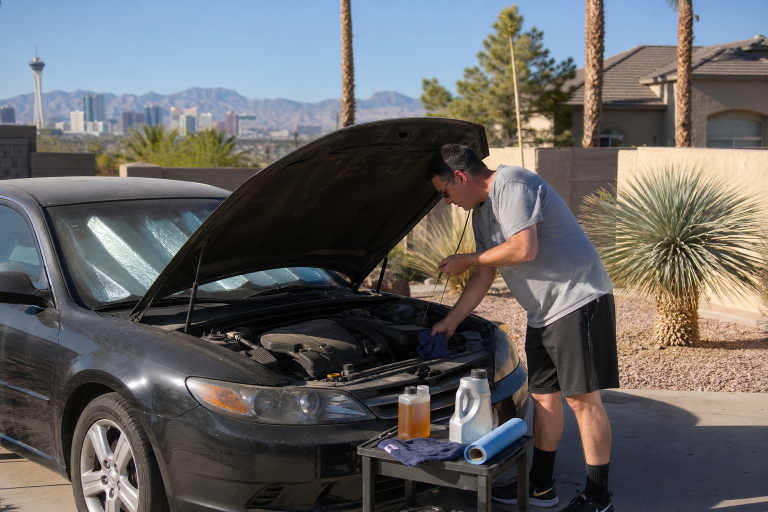
Use early spring, midsummer, and late summer as reminders to inspect the basics. Heat places added demand on air conditioning, batteries, belts, hoses, fluids, and tires. The summer driving guidance for vehicle checks recommends checking the cooling system condition, tire pressure, fluid levels, battery performance, and wiper blades before long drives or peak summer travel.
- Check coolant level and look for leaks or dried residue around hoses.
- Run the air conditioner before the hottest part of the season and replace a restricted cabin air filter if needed.
- Have an aging battery and charging system tested before a road trip.
- Inspect belts, hoses, and wiper blades for cracking, glazing, cuts, or stiffness.
- Check tire pressure when the tires are cold, using the pressure listed on the driver-door placard.
- Top off washer fluid and review oil, brake fluid, and other service intervals in the owner’s manual.
Protect The Cabin From Sun And Heat
A folding windshield sunshade is inexpensive, removable, and useful for reducing direct sunlight on the dashboard. Window film is a more permanent option that may help with glare and solar heat management, depending on the film type and installation. Neither replaces air conditioning, but both can make a parked car less punishing when it is time to drive home. Whenever possible, choose covered parking, angle the vehicle to limit afternoon sun through the windshield, and use light-colored seat covers where appropriate. Keep covers clear of airbags, seat-mounted sensors, vents, and seat-belt hardware. Clean spills promptly, because heat can set stains into fabric and leave residue on leather or vinyl.
Window Film, Glare Control, And Nevada Rules
Film should not be chosen by darkness alone. Visible light transmission concerns how much light passes through the glass, while heat rejection, ultraviolet filtering, glare reduction, privacy, and signal compatibility can vary widely. Dyed film is often selected for appearance, metallic film may affect electronic signals in some applications, and carbon or ceramic films are commonly considered for heat-control performance. Quality also matters. A well-matched film and careful installation can support clear visibility and long-term durability, while poor materials may fade, haze, peel, or bubble. Before committing, review Nevada’s window-film requirements, including the rules that apply to front side windows, rear windows, mirrors, and windshield applications.
Keep Paint Safer From Sun, Dust, And Road Debris
Choose Protection For The Problem You Want To Solve
- Wax: Adds temporary shine and water repellency, but usually needs frequent reapplication.
- Paint sealant: Provides longer-lasting synthetic protection with straightforward upkeep.
- Ceramic coating: Creates a durable, hydrophobic surface that can simplify washing and help resist bonded contaminants.
- Paint protection film: Offers the strongest defense against impacts and chips in high-risk areas such as bumpers, hoods, mirrors, and rocker panels.
Wash dust away rather than wiping it off dry. Begin with a thorough rinse, use clean wash media, and dry with soft microfiber towels. In Las Vegas, it is also wise to quickly remove bird droppings, bug residue, tree sap, and hard-water spots, since heat can make contaminants harder to remove.
Interior Materials Need Consistent Attention
Vinyl, plastic, leather, fabric, and synthetic trim all respond differently to heat and cleaners. Use products designed for automotive interiors, avoid overly glossy dressings on steering wheels or pedals, and apply conditioner sparingly to materials that call for it. Once a month, vacuum seats and carpets, wipe touchpoints, clean interior glass, inspect dashboard trim, and remove unneeded electronics, medications, aerosol cans, or plastic items from direct sunlight.
Tires, Batteries, And Parked-Vehicle Safety
Temperature changes affect tire pressure, and hot roads add stress during longer drives. Check pressure before driving, inspect sidewalls for cracks or bulges, watch for uneven tread wear, and do not forget the spare. A battery that seems acceptable in mild weather may struggle after repeated exposure to desert heat, so testing it before travel is a sensible precaution. Heat comfort is separate from heat safety. Always look through the cabin and check the back seat before locking up. Never leave children or pets unattended, even with windows cracked, a sunshade installed, or the vehicle parked in partial shade. Lock parked vehicles to help prevent children from entering them, and call emergency services if someone appears trapped or distressed.
A Simple Monthly Heat-Protection Routine
- Rinse away dust and wash road film from paint, wheels, and glass.
- Inspect windshield chips, wiper blades, and exterior weather seals.
- Check cold tire pressure, tread condition, and visible sidewall damage.
- Test air conditioning performance and listen for unusual noises.
- Clean and protect seats, dashboard surfaces, and interior glass.
- Inspect paint for fading, rough spots, scratches, or contaminants.
- Review the service schedule and address small concerns before they become costly repairs.
Conclusion
Las Vegas heat does not require a complicated car-care routine, but it does reward consistency and preparation. Long periods of intense sun, high temperatures, dust, and dry conditions can place extra stress on a vehicle’s paint, interior materials, tires, battery, and cooling system. Using shade whenever possible, washing carefully, checking tire pressure and battery condition, and keeping the cabin clean can help reduce everyday wear. Exterior protection, such as a quality sealant or ceramic coating, may also make routine cleaning easier when properly maintained. Drivers should also inspect fluids, wipers, belts, and air-conditioning performance before the hottest months arrive. A simple routine performed regularly is more effective than waiting until heat-related problems become obvious. With practical care and timely inspections, Las Vegas drivers can help their vehicles remain more comfortable, safer to operate, and easier to maintain throughout the long Nevada summer.